
A Florida home can feel sticky even when the thermostat says 74 degrees. That is because temperature is only half of comfort. When indoor moisture stays high, your skin cannot cool itself as easily, towels take longer to dry, and musty odors can settle into closets and bedrooms. Knowing how to reduce indoor humidity in Florida starts with finding where that moisture is coming from and making sure your air conditioner is removing it effectively.
For most homes along the Space Coast, a healthy indoor relative humidity range is about 40% to 55%. Readings that regularly climb above 60% deserve attention. A simple digital hygrometer can show you what is happening room by room and help you tell the difference between a one-day weather event and an ongoing comfort problem.
Why Florida Homes Hold So Much Moisture
Florida’s outdoor air carries a lot of water vapor for much of the year. Every time doors open, people come inside from the rain, or a bathroom fan is skipped, some of that moisture enters the home. Coastal conditions can make the challenge even more noticeable, especially during long stretches of wet weather.
Indoor activities add to the load. Cooking, showers, laundry, aquariums, and even a busy household can raise humidity. In a well-sealed home, that moisture has fewer places to escape. In a leaky home, humid outdoor air may be constantly working its way in through gaps around doors, windows, attic penetrations, or poorly sealed return-air areas.
The air conditioner is usually the home’s main dehumidifier. As warm indoor air passes over the cold indoor coil, water condenses and drains away. If the system is not running long enough, is not draining properly, or has a performance issue, the house may cool down without ever feeling truly dry.
Start With Your Air Conditioner
Before buying several small dehumidifiers, pay attention to how your AC is operating. A properly sized, properly maintained system should remove a meaningful amount of moisture during normal cooling cycles.
Avoid setting the thermostat too low
Dropping the thermostat can make a room feel better temporarily, but it is not always the best humidity solution. It may increase energy use without addressing why the air feels damp. Start with a reasonable setting, often around 74 to 78 degrees depending on your household, and focus on whether the system can maintain humidity as it cycles.
A thermostat with humidity monitoring can be useful, but the reading should be compared with a separate hygrometer before making big decisions. Thermostat sensors are helpful guides, not always perfect measuring tools.
Change filters and keep airflow clear
A clogged filter restricts airflow. That can reduce comfort, strain the equipment, and interfere with the system’s ability to move air across the coil as designed. Check the filter monthly during heavy-use seasons and replace it based on its condition and the manufacturer’s recommendation.
Keep supply vents open and clear of furniture, rugs, or curtains. Closing many vents to force more air into one room can create airflow problems and does not usually solve whole-home humidity. If one room is consistently damp while the rest of the house is comfortable, that points to a balance, insulation, window, or airflow issue worth investigating.
Watch for signs of an AC problem
If your system runs but the house feels clammy, look for warning signs: weak airflow, ice on refrigerant lines, water around the indoor equipment, a full or backed-up drain pan, unusual cycling, or indoor humidity that stays above 60%. A clogged condensate drain can become both a moisture and water-damage concern.
System sizing matters, too. An oversized AC can cool the home so quickly that it shuts off before it has had enough time to remove moisture. On the other hand, an undersized or struggling system may run constantly and still fall behind during Florida’s hottest afternoons. There is no honest one-size-fits-all fix. A technician should assess the equipment, airflow, home layout, and humidity readings before recommending repairs or replacement.
Reduce Moisture at the Source
The most effective approach combines AC performance with a few practical household habits. Small changes can make a noticeable difference, particularly in bathrooms, kitchens, and laundry areas.
Run bathroom exhaust fans during showers and leave them on for about 15 to 20 minutes afterward. Use the kitchen exhaust fan when boiling water or cooking with steam. If the fans are noisy, weak, or do not seem to pull air well, they may need attention. They should send moist air outdoors, not into an attic or enclosed space.
When weather permits, avoid drying clothes indoors. A clothes dryer should vent outside and have a clear path for exhaust. If the laundry area feels unusually hot or humid while the dryer runs, stop and have the venting checked. That is a comfort issue and can also become a safety concern.
Check for plumbing leaks under sinks, behind toilets, around water heaters, and near appliances. Even a slow leak can raise humidity inside a cabinet or wall long before it becomes obvious. After a storm, inspect windows, roof areas, and ceilings for stains or damp spots. Florida rain can reveal openings that stay hidden during dry weather.
Use a Dehumidifier Where It Makes Sense
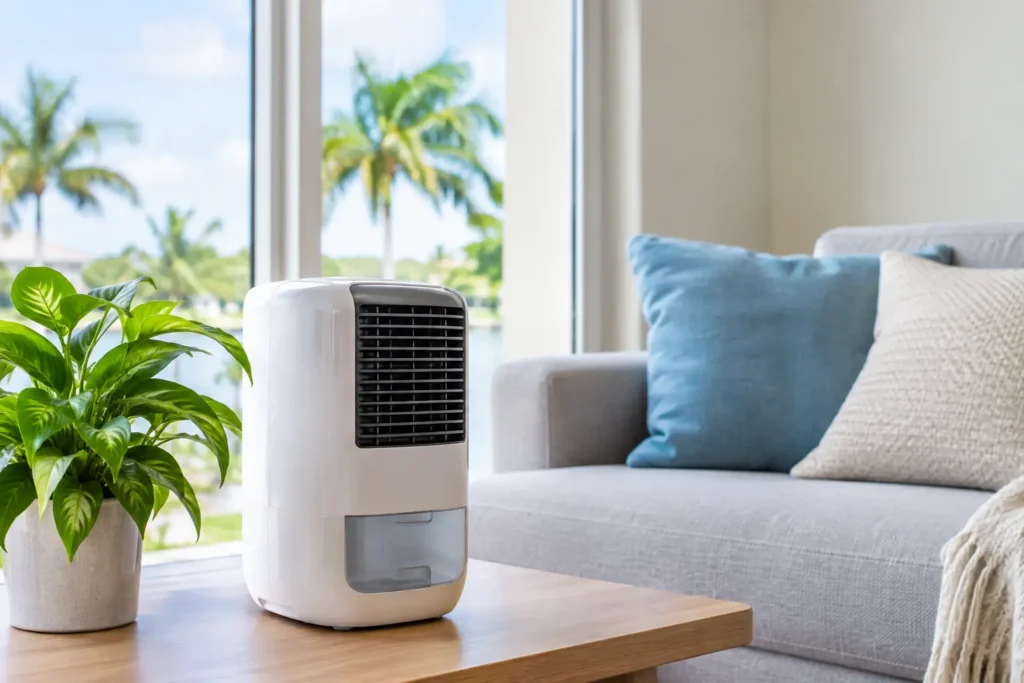
A portable dehumidifier can be a smart targeted tool for a laundry room, bedroom, garage-adjacent space, or an area with a recurring moisture issue. Choose one based on the size of the area, and plan for where its water will go. Units with a drain connection are more convenient for steady use, while bucket-style models require regular emptying and cleaning.
A dehumidifier is not a substitute for a malfunctioning air conditioner or an active leak. If you need multiple units running every day to keep the home comfortable, the underlying cause deserves a closer look. Portable units also produce some heat, so they can be less efficient for treating an entire house.
Whole-home dehumidification may make sense for certain homes, especially where indoor humidity remains high despite correct AC operation. The right choice depends on the home’s size, occupancy, insulation, equipment condition, and how consistently humidity is elevated. It should be selected and set up as part of the overall comfort system, not as a rushed add-on.
Keep Humid Outdoor Air From Sneaking In
Florida homes need enough fresh-air exchange, but uncontrolled outdoor air infiltration can overload your cooling system. Look for worn weatherstripping around exterior doors, gaps around windows, damaged door sweeps, and unsealed openings where pipes or wiring enter the house.
Pay special attention to the attic access panel. A poorly sealed or uninsulated access panel can allow hot, humid attic air into a conditioned hallway or closet. Sealing obvious gaps is often worthwhile, but do not block required ventilation or cover electrical components. If you are unsure where moisture is entering, a professional evaluation can be more useful than guessing with caulk.
How to Reduce Indoor Humidity in Florida During Rainy Weeks
A few days of heavy rain can test even a well-maintained system. Keep doors and windows closed while the AC is running, and avoid turning the system off for long periods when the house is unoccupied. Letting a Florida home warm up and absorb moisture all day can make it harder and more expensive to bring conditions back under control later.
Use your bathroom and kitchen fans consistently, check the condensate drain area, and watch your humidity monitor rather than relying on how the air feels alone. If indoor readings rise sharply during rain, note whether the change happens throughout the home or only in one area. Whole-home humidity points more toward HVAC capacity, airflow, or outside-air infiltration. A single damp room may point toward a localized leak, ventilation issue, or insulation problem.
When It Is Time to Call for Help
Call for HVAC service when the AC is cooling but the home remains clammy, humidity stays above 60%, the drain line repeatedly clogs, or you notice mildew odors and condensation on vents or windows. Do not ignore water near the indoor unit or ceiling stains that appear after the system runs.
A good service visit should include clear questions about what you are experiencing, an inspection of the system’s cooling and drainage performance, and practical options explained without pressure. Space Coast AC takes that approach because Florida comfort is not just about getting cold air from a vent. It is about helping your home feel dry, steady, and comfortable without unnecessary surprises.
Start with a hygrometer, keep moisture-producing activities vented, and give your AC the maintenance it needs. If the numbers still stay high, getting a straightforward diagnosis can protect your comfort, your home, and your budget before a small humidity issue turns into a larger one.