
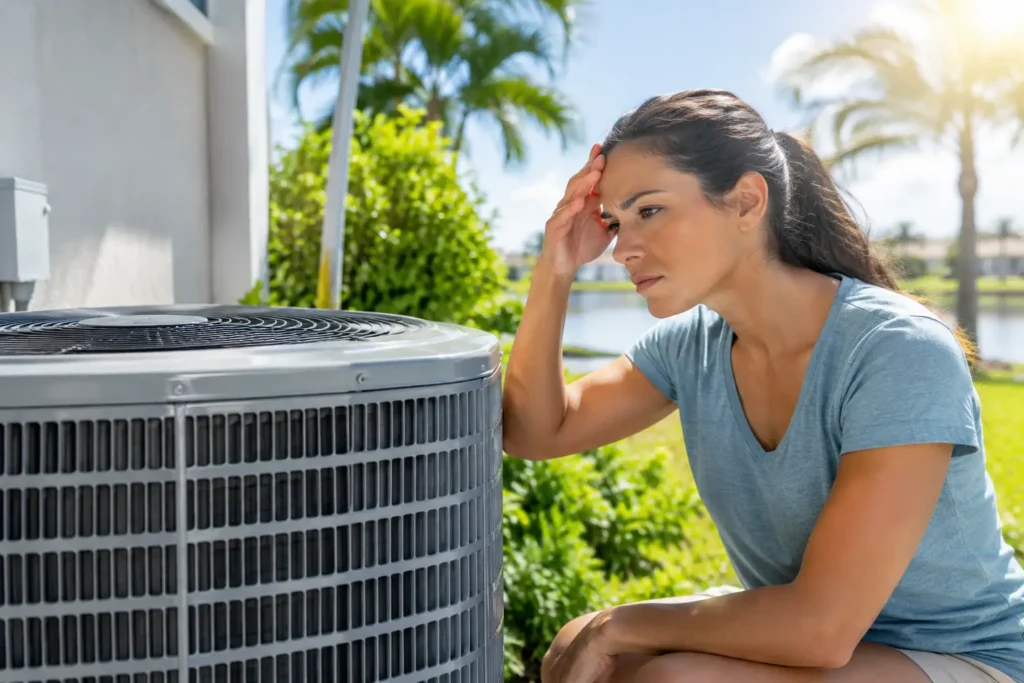
A Florida afternoon can turn uncomfortable fast when the thermostat says 74, but the house feels warm, sticky, and still. If your AC is not cooling in Florida heat, the cause may be as simple as an incorrect thermostat setting or a clogged filter. It can also point to a part that needs prompt attention before a small repair becomes a complete system shutdown.
The goal is not to guess at an expensive replacement. Start with a few safe checks, pay attention to what your system is doing, and know when it is time to bring in a qualified HVAC professional.
Start With the Simple Checks
Before assuming the air conditioner has failed, check the thermostat. Set it to Cool, lower the temperature a few degrees below the current indoor reading, and make sure the fan is set to Auto rather than On. When the fan stays set to On, it can continue moving air between cooling cycles. That air may feel lukewarm, especially in a humid Florida home.
Next, look at the air filter. A heavily loaded filter restricts airflow, makes the system work harder, and can leave rooms feeling warmer than they should. In some cases, poor airflow can contribute to a frozen indoor coil. If the filter is visibly gray, clogged, or overdue for replacement, install the correct size and type recommended for your system.
Check the electrical panel as well. A tripped breaker may stop the outdoor unit while the indoor blower continues to run. That means you may hear air moving through the vents even though the home is not actually being cooled. If a breaker has tripped once, reset it only once. If it trips again, leave it alone and call for service. Repeated trips can signal an electrical problem that needs a proper diagnosis.
Why an AC May Not Cool During Florida Heat
Florida systems face a tougher workload than air conditioners in milder climates. Long cooling cycles, high humidity, afternoon storms, and coastal salt air all add stress over time. During a heat wave, a healthy system may run for longer stretches, but it should still produce cool air and gradually hold the temperature near the setting.
If the AC is running constantly but the indoor temperature keeps rising, several issues could be involved. A dirty outdoor coil can make it difficult for the system to release heat outside. A failing capacitor or contactor may keep the outdoor unit from starting correctly. Low refrigerant from a leak can reduce cooling capacity and may cause ice to form on refrigerant lines or the indoor equipment.
There is no single answer that fits every home. An older system might be struggling because of wear, while a newer system may have a drainage, electrical, or airflow issue. Accurate troubleshooting matters because the right repair could be far less costly than replacing equipment that still has useful life left.
Humidity Can Make the Problem Feel Worse
A home can feel uncomfortable even when the thermostat temperature does not look extreme. That is because humidity affects how your body feels. When indoor air stays humid, sweat does not evaporate as easily, and 76 degrees can feel much warmer than it should.
An air conditioner removes moisture as it cools. If it is oversized, short cycling, low on refrigerant, or not moving enough air, it may not remove humidity effectively. You may notice clammy rooms, condensation near vents, musty odors, or a thermostat that seems close to the target temperature while the home still feels damp.
What You Can Safely Check Outside
Walk outside and look at the condenser, the large outdoor portion of the system. It needs open space to move heat away from your home. Remove leaves, loose grass clippings, and lightweight debris around the unit, but do not take panels off or spray components with high-pressure water.
Keep shrubs and stored items from crowding the equipment. Air needs room to circulate around the sides and above the unit. If you hear loud buzzing, repeated clicking, grinding, or the unit starts and stops every few minutes, turn the system off and schedule service. Continuing to run equipment with an electrical or mechanical problem can create more damage.
Also look for ice. Frost or ice on the refrigerant line, outdoor unit, or indoor equipment is not normal. Turn the thermostat to Off and set the fan to On to help thaw the system, then contact a professional. Do not chip or scrape the ice, and do not assume that adding refrigerant is the answer. Refrigerant does not get used up under normal operation, so low refrigerant usually means there is a leak that should be found and repaired.
Signs You Should Call for AC Repair Now
Some cooling problems should not wait for the next convenient appointment, particularly when young children, older adults, pets, or medical needs are involved. Call for professional help if you notice any of the following:
- The system blows warm air while the outdoor unit is not operating.
- Your breaker trips again after a reset.
- You see ice, water pooling around indoor equipment, or refrigerant-line frost.
- The AC makes burning, buzzing, grinding, or persistent clicking sounds.
- The house is getting hotter despite the system running continuously.
- You smell something burning or notice a strong electrical odor.
A technician can test electrical components, system pressures, drainage, airflow, and overall performance without guesswork. That approach helps separate a repairable issue from a larger equipment decision.
Avoid These Costly DIY Moves
When your AC is not cooling in Florida heat, it is understandable to want a fast fix. Still, some do-it-yourself attempts can be unsafe or make the repair more complicated. Avoid opening electrical panels, handling refrigerant, bypassing safety switches, or repeatedly resetting breakers.
Do not close most of the supply vents in an attempt to force more air into one room. Restricting too many vents can reduce airflow across the system and create additional strain. If one room stays warmer than the rest of the house, the cause may be related to sun exposure, insulation, airflow balance, or a system issue that needs to be evaluated.
It is also wise to be cautious about immediate replacement recommendations when the problem has not been clearly explained. Some systems do reach a point where replacement makes financial sense, especially with major compressor failure, frequent repairs, or declining efficiency. But a fair recommendation should include the condition of the equipment, the repair needed, expected costs, and the practical options available to you.
Prevent the Next Hot-Weather Breakdown
The best time to address an air conditioner is before the hottest stretch of the year. Replace filters on schedule, keep the outdoor unit clear, and arrange regular maintenance to catch worn electrical parts, drainage concerns, dirty coils, and performance issues early.
For Space Coast homeowners, preventive attention also matters because salt air and heavy humidity can accelerate wear on outdoor components. Routine service gives you a clearer picture of how your system is performing and helps reduce the chance of a surprise breakdown on the hottest day of the season.
A good HVAC visit should leave you with more than a working system. You should understand what was found, what was repaired, what can wait, and what to watch for next. When the heat is pressing in, clear answers and a properly tested repair can make home feel like home again.
Nee AC Repair in Merritt Island or Brevard County?
If your air conditioner is running but not cooling your home, Space Coast AC can help. We provide professional AC repair, maintenance, and installation in Merritt Island, Cocoa, Cocoa Beach, Rockledge, Viera, Melbourne, Satellite Beach, Titusville, and surrounding Brevard County areas.
Our technicians will diagnose the problem, explain your repair options, and help get your home comfortable again.
Call Space Coast AC at 321-321-5922 or visit spacecoastac.net to schedule service
Space Coast AC | Licensed Florida HVAC Contractor CAC1816107