
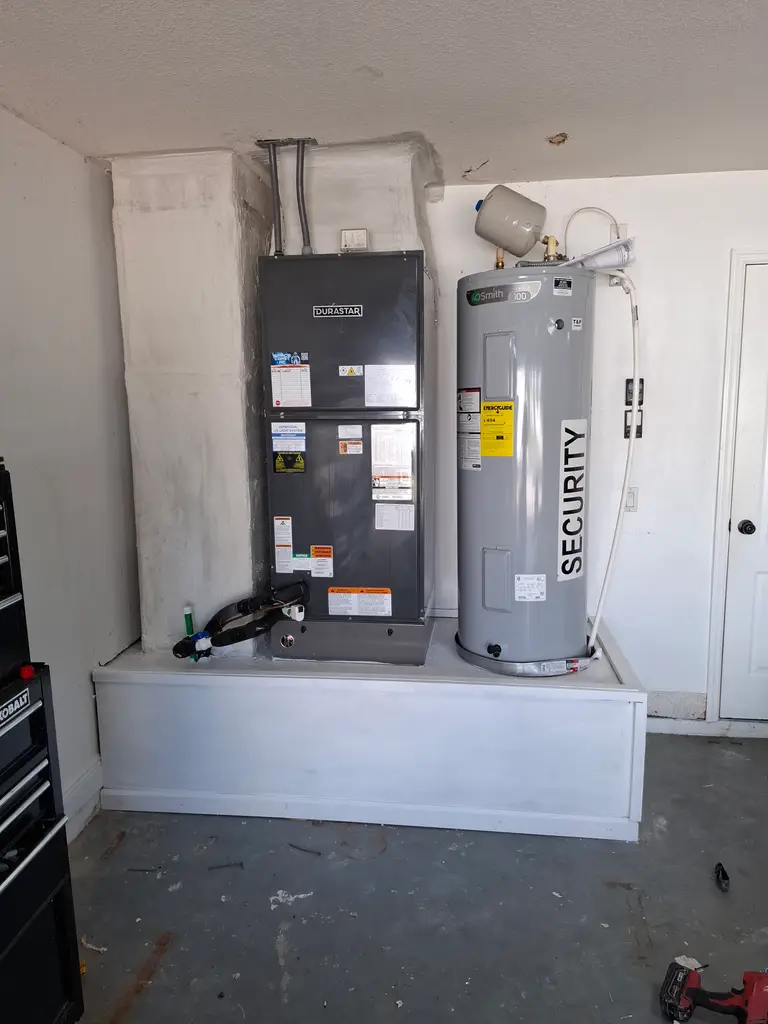
When a Florida afternoon feels sticky even though the thermostat says the house is cool, it is natural to ask: should AC fan run continuously? The answer is usually no for a standard system, but the right setting depends on your equipment, comfort concerns, and humidity level. In Brevard County, where AC systems work hard for much of the year, the fan setting can affect both your electric bill and how comfortable your home feels.
Should Your AC Fan Run Continuously or Stay on Auto?
Most thermostats have two fan choices: Auto and On. With the fan set to Auto, the indoor blower runs only while the system is actively cooling or heating, plus a brief period before or after a cycle on many systems. With the fan set to On, the blower keeps moving air whether the air conditioner is cooling or not.
For most homes, Auto is the better everyday choice. It limits electricity use, gives the system time to remove moisture from the indoor air, and reduces unnecessary wear on the blower motor and filter.
The On setting is not automatically harmful. It may help circulate air in a home with a warm back bedroom, a second-story hot spot, or rooms that do not receive equal airflow. But continuous circulation is not the same as continuous cooling. If the air conditioner is not running, the blower is simply recirculating the air already in the home.
Why Continuous Fan Operation Can Be a Problem in Florida
⚠️ Reintroduces Humidity: When the cooling cycle stops, continuous airflow evaporates moisture on the coils back into your rooms, making your house feel clammy.
⚡ Higher Energy Bills: Older single-speed blower motors consume continuous electricity when left on ON.
🧹 Faster Filter Clogging: Constant circulation pulls dust and debris through your air filter much faster, requiring more frequent changes.
When Running the AC Fan Continuously May Help
There are situations where the On setting can provide a real comfort benefit. If one area of the home is consistently warmer or cooler than the rest, circulating air can help even out temperatures between cooling cycles. This can be useful in larger homes, homes with multiple levels, or rooms with lots of afternoon sun.
It can also provide more frequent air filtration. Your filter only captures particles when air moves through it, so more blower runtime means more air passes through the filter. For households concerned about dust, pet dander, or everyday airborne particles, that may be worthwhile, provided the filter is changed on schedule and the humidity remains under control.
Some newer systems are specifically designed to run their variable-speed blowers at low speed for long periods. These systems can circulate air more efficiently and quietly than older equipment. If your system was set up this way by the installer, continuous or near-continuous fan operation may be part of its normal design.
The key is not to assume every system should be treated the same. A setting that works well for a newer variable-speed system may be wasteful or uncomfortable on an older single-speed unit.
A Better Starting Point: Use Auto and Watch Your Comfort
If you are unsure which setting to use, set the fan to Auto for several days and pay attention to comfort rather than temperature alone. Notice whether the house feels dry and even from room to room, whether certain rooms become uncomfortable between cycles, and whether the system is cycling normally.
If you have persistent hot or cold rooms, leaving the fan on may offer temporary relief. It is still worth finding out why the imbalance exists. Common causes include restricted airflow, a dirty filter, closed or blocked supply vents, insulation issues, thermostat placement, or equipment that is not sized or operating properly for the home.
Start with the simple checks. Make sure return grilles and supply vents are open and unobstructed. Check the air filter and replace it if it is dirty. Avoid closing off multiple vents in an attempt to force more air into another room, since that can create airflow problems for the system.
If the Fan Runs While Set to Auto, Something May Need Attention
There is a difference between choosing to leave the fan on and having a fan that will not shut off. If your thermostat is set to Auto but the indoor blower keeps running long after a cooling cycle ends, it may be time for a professional inspection.
A short delay is often normal. Many systems run the blower for a minute or a few minutes after the compressor stops to use the remaining cool air from the coil. Hours of nonstop operation, however, are not typical for a standard system.
Possible causes can include a thermostat setting issue, a stuck relay, a control board problem, wiring trouble, or a blower-related fault. The right repair depends on an accurate diagnosis. Replacing parts without identifying the cause can turn a manageable repair into an unnecessary expense.
It also helps to clarify which fan is running. The indoor blower is the fan that circulates air through your home. The outdoor unit has its own fan, which normally runs while the system is actively cooling. If the outdoor fan runs continuously, runs when the thermostat is off, or stops while the system is trying to cool, turn the system off and have it checked. Continuing to operate it could lead to more extensive damage.
Continuous Fan Use and Your Electric Bill
The financial impact varies widely. A modern efficient blower operating at a low speed may add a relatively modest amount to monthly energy use. An older blower motor operating at full speed around the clock can add noticeably more, especially during months when the system is already cooling frequently.
That is why the best question is not simply whether continuous fan use costs money. It does. The more useful question is whether it delivers enough comfort, air circulation, or filtration benefit to justify the additional cost in your specific home.
If your house only feels comfortable with the fan running all the time, treat that as useful information. It may point to an airflow or humidity issue worth addressing rather than a setting you must live with permanently.
How to Protect Comfort Without Overworking the System
A well-maintained AC system should cool evenly, manage moisture, and cycle in a predictable way for most of the year. Regular filter changes and professional maintenance give you the best chance of getting that performance when Space Coast heat and humidity settle in.
If the fan setting is confusing, the home feels damp, or the blower will not stop when it should, a hands-on evaluation can provide clear answers. Space Coast AC can assess how your system is operating, explain the options in plain language, and recommend only the repair or adjustment that makes sense for your home and budget.
Your thermostat’s fan switch is a small setting, but it can reveal a lot about your home’s comfort. Use Auto as the normal starting point, then let humidity, airflow, and your system’s design guide the next step.
Need Help Balancing Your Home’s Comfort and Humidity?
If your home feels clammy or your fan won’t shut off, don’t guess—let the experts help. Contact Space Coast A/C today to schedule a system evaluation or maintenance check!