
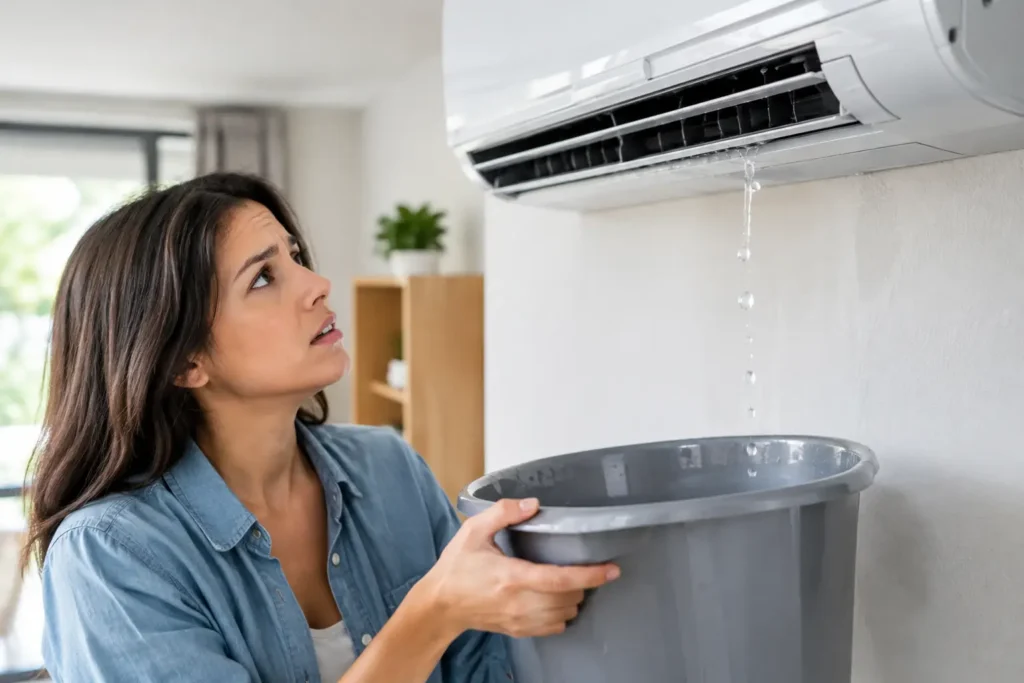
A puddle beneath an indoor AC unit is never something to ignore, especially during a Florida summer when your system may run for hours at a time. If you have an AC leaking water in house, the good news is that the water itself usually comes from normal condensation. The concern is why that moisture is no longer draining where it should – and how quickly it could damage drywall, flooring, ceilings, or electrical components.
A small leak can sometimes be stopped with a simple maintenance fix. Other times, it is a warning that the system is frozen, the drain line is blocked, or a part needs professional attention. Acting early protects both your home and your comfort.
Why an AC Produces Water in the First Place
Your air conditioner does more than cool the air. As warm, humid indoor air passes over the cold evaporator coil, moisture in that air condenses into water. In Brevard County, where humidity is a constant part of life, a central AC system can remove a surprising amount of moisture each day.
That water should collect in a drain pan and travel through a condensate drain line to the outside of the home. When the pan, line, coil, or pump has a problem, the water can back up and spill indoors instead. The source may be near the indoor air handler, in a closet or garage, or above a ceiling if the equipment is located in the attic.
What to Do Right Away When Your AC Is Leaking Water
First, protect the area around the leak. Move rugs, furniture, boxes, and electronics away from standing water. Use towels or a wet vacuum to remove what you can, but do not open electrical panels or handle wiring near the wet area.
Next, turn the thermostat from cooling to off. If you see water near the unit, ceiling staining, a steady drip, or a large puddle, it is better to stop the system than let the leak continue. Turning the system off can also prevent further damage if a frozen coil is involved.
If water is actively dripping through a ceiling, place a bucket underneath and avoid pressing on the drywall. A ceiling that is sagging or visibly swollen can be unsafe. Keep people out of that area and arrange service promptly.
Before restarting the AC, take a few photos of the leak and the affected area. Those details can help a technician trace the issue, and they may be useful if water damage needs to be documented later.
Common Reasons an AC Leaks Water Inside
A clogged condensate drain line
A blocked drain line is one of the most common causes of indoor AC leaks. Over time, algae, slime, dust, and debris can collect in the line. Florida’s humidity gives that buildup plenty of opportunity to grow.
When the line is partially or fully blocked, condensation has nowhere to go. The drain pan fills, then overflows into the air handler cabinet, closet, garage, or ceiling. You may also notice a musty odor near the unit, water in the secondary pan, or the AC shutting off if it has a working safety float switch.
Some homeowners try to clear a drain line themselves from the outside drain opening. That can work for a minor blockage, but forcing debris deeper into the line or using the wrong chemical can create a bigger problem. If the line repeatedly clogs, the system needs a closer look rather than another temporary flush.
A dirty air filter or restricted airflow
A neglected filter can create an issue that does not look related to drainage at first. When airflow across the evaporator coil is restricted, the coil can become too cold and freeze. Once the system cycles off or the ice begins to thaw, the volume of melting water may overwhelm the drain pan.
Check the filter if it looks gray, loaded with dust, or has not been changed on schedule. Replace it with the correct size and type for your system. Then leave the cooling off long enough for a suspected frozen coil to thaw completely. Restarting an icy system can lead to more water, poor cooling, and unnecessary strain on the compressor.
A dirty filter is not the only reason a coil freezes. Low refrigerant, a failing blower component, or other airflow problems can cause it too. If ice returns after a clean filter is installed, professional diagnosis is the sensible next step.
A damaged or rusted drain pan
The primary drain pan sits beneath the evaporator coil, where it catches condensation before it enters the drain line. Older pans can rust, crack, or corrode, allowing water to escape before it reaches the drain opening.
This issue is easy to miss because the leak may be slow at first. In attic installations, a damaged primary pan can eventually fill the secondary pan below it. If that backup pan also has a problem, the first visible sign may be a water spot on the ceiling.
Drain pan replacement is usually not a do-it-yourself repair. Access can be tight, and the condition of the coil, drain connection, and safety switch should be checked at the same time.
A failed condensate pump
Not every home relies on gravity to carry water outside. Some systems use a condensate pump to move water up and out through a discharge line. When that pump loses power, clogs, or fails mechanically, the reservoir can overflow.
You may hear the pump running constantly, notice that it is silent when it should be operating, or see water around the pump itself. Because a pump issue can allow water to accumulate quickly, it is wise to turn off cooling and have it repaired before running the system again.
A disconnected or poorly installed drain line
A drain line connection can loosen, crack, or separate. This is more likely around fittings, after previous work near the equipment, or when a line has not been properly supported. A line that is pitched incorrectly may also drain slowly and allow water to back up.
These problems require more than tightening a visible fitting. A technician should confirm that the line drains freely, is correctly trapped and vented where needed, and has appropriate safety protection to stop the system before an overflow damages your home.
When a Water Leak Is an Emergency
Call for prompt HVAC service when water is coming through a ceiling, spreading across flooring, reaching electrical equipment, or returning immediately after you shut down and restart the system. You should also call if the AC is not cooling, ice is visible on refrigerant lines or the indoor coil, or you cannot identify a safe, simple reason for the leak.
A leaking unit may not always require replacement. In fact, many water leaks are resolved with drain service, a new pump, a corrected connection, or repair of the underlying airflow issue. An honest diagnosis matters because replacing equipment will not solve a drainage or installation problem by itself.
Space Coast AC approaches these calls with the goal of finding the actual cause, explaining the repair options clearly, and helping you avoid preventable water damage. For an active leak after hours, 24/7 emergency support can make a real difference.
Preventing Future AC Water Leaks
The most useful prevention is regular attention before peak summer demand. Change filters on a schedule that fits your household, particularly if you have pets, allergy concerns, or a system that runs nearly nonstop. Keep the area around the indoor unit clear so a technician can inspect it and so leaks are easier to spot early.
Routine AC maintenance should include checking condensate drainage, the drain pan, the safety float switch, coil condition, and system airflow. This is especially valuable in coastal Florida, where long cooling seasons and heavy humidity place constant demand on the moisture-removal side of your equipment.
If you notice a recurring wet spot, a musty smell, weak cooling, or an AC that shuts off unexpectedly, do not wait for a larger overflow. A quick service visit can often protect the part of your home that is much harder and more expensive to repair: everything around the air conditioner.