
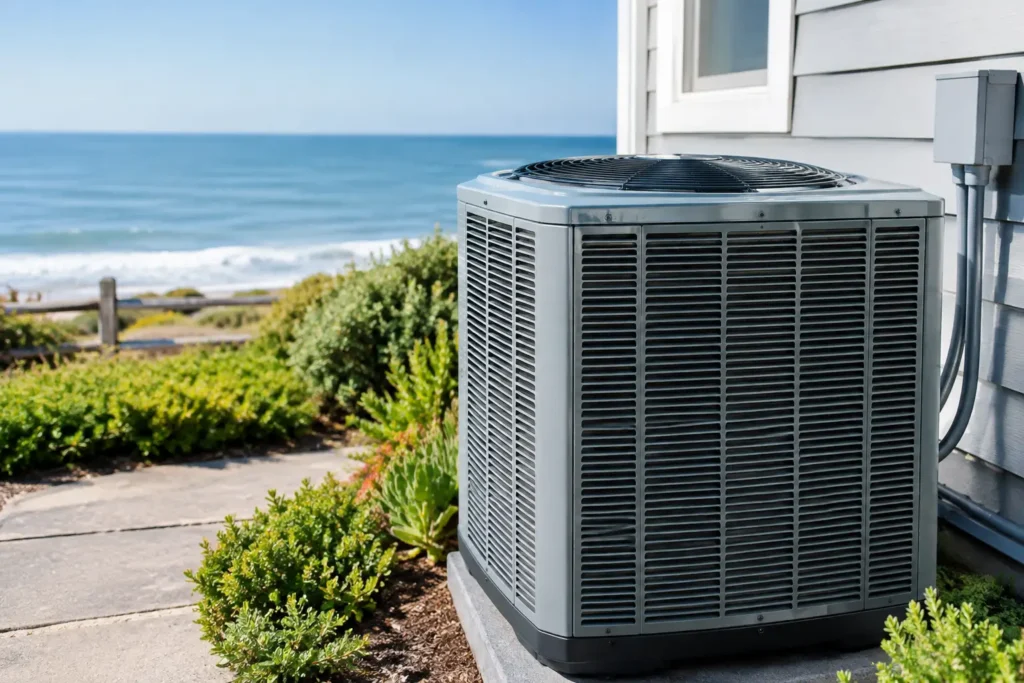
Your outdoor AC unit has a difficult job on Florida’s coast. It handles extreme heat, humidity, rain, and long cooling seasons. Add sea spray and salty moisture to the mix, and the metal parts outside your home can wear down faster than they would farther inland.
Salt air damage to an AC unit is not always obvious at first. Your system may still cool the house normally while corrosion slowly affects the coil, cabinet, wiring connections, and other components. Catching that wear early gives you more repair options and can help avoid an inconvenient breakdown during a hot afternoon.
Why Salt Air Is Hard on Outdoor AC Equipment
Salt itself does not have to land on the unit as visible ocean spray to cause trouble. Coastal air carries fine salt particles, especially during windy weather. Those particles settle on the outdoor condenser and combine with Florida humidity. The resulting moisture layer can speed up corrosion on aluminum, copper, steel, and electrical connections.
The condenser coil is often the biggest concern. This outdoor coil releases heat from your home, and it depends on thin metal fins and tubing to do its job efficiently. As corrosion develops, the coil may have a harder time transferring heat. Over time, corrosion can also contribute to refrigerant leaks, which can leave your AC running longer without delivering the same comfort.
A little surface discoloration on the cabinet does not automatically mean the system is failing. Outdoor equipment is built for weather exposure, and some cosmetic aging is normal. The concern is corrosion that affects coil performance, fasteners, wiring, fan components, or the structure of the unit itself.
Salt Air Damage to AC Unit Components: Signs to Watch For
Homeowners do not need to take apart an AC system to spot potential trouble. During a quick look at the outdoor unit, watch for changes that seem to be getting worse between maintenance visits. Call for an evaluation if you notice several of these signs:
- Rust, bubbling paint, white powdery residue, or flaking metal on the cabinet, coil area, screws, or electrical box
- Bent or deteriorating coil fins, especially if debris and corrosion are packed into the coil surface
- Cooling that feels weaker than usual, longer run times, or rooms that struggle to reach the thermostat setting
- A sudden increase in energy bills without a clear change in household use or weather patterns
- Water, oil staining, unusual noises, or ice forming on refrigerant lines or the outdoor coil
These signs can have more than one cause. For example, high energy use may stem from an airflow issue, thermostat problem, low refrigerant, or an aging system. That is why a clear diagnosis matters. A technician should inspect the equipment, explain what is worn, and tell you whether the problem is repairable before suggesting replacement.
Coastal AC Care That Helps Slow Corrosion
You cannot remove salt from the coastal air, but routine care can reduce how long it stays on your equipment. The goal is simple: keep the condenser clean, allow air to move freely around it, and address small corrosion concerns before they become costly ones.
A gentle fresh-water rinse can help wash salt buildup from the outside of the condenser. Use a regular garden hose at low pressure, never a pressure washer. High pressure can flatten the delicate fins that allow the coil to release heat. Keep the spray gentle and directed through the cabinet openings rather than directly into electrical components.
Before rinsing or touching the unit, turn it off at the outdoor disconnect or have a professional handle the cleaning. If you are unsure where water should and should not go, it is better to leave the job alone. A well-meaning cleaning can create an electrical issue or damage the coil if done incorrectly.
Keep shrubs, mulch, lawn equipment, and stored items away from the unit. The condenser needs open space to pull in and discharge air. Vegetation that traps damp salt air around the cabinet can encourage corrosion, while grass clippings and leaves can clog the coil surface.
Avoid wrapping the unit in a tarp for long periods. A cover can trap moisture against the cabinet and create the very conditions you are trying to prevent. If a cover is used briefly during a storm or home project, remove it as soon as conditions allow.
Some coastal installations may benefit from manufacturer-approved protective coatings or equipment designed with added corrosion resistance. This is not a one-size-fits-all answer. The right choice depends on how close the home is to the water, the direction of prevailing winds, the age and condition of the current system, and the manufacturer’s guidance. Applying an unapproved product can complicate future service or affect warranty coverage.
Maintenance Is Your Best Early Warning System
For many Space Coast homes, professional AC maintenance is less about a tune-up checklist and more about finding small issues while they are still manageable. Coastal equipment deserves a close inspection of the outdoor coil, refrigerant lines, cabinet, electrical connections, drain system, and overall cooling performance.
During service, a technician can clean the coil safely, check for damaged fins, look for corrosion around wiring and terminals, test electrical readings, and identify early refrigerant concerns. They can also tell you whether the corrosion is mostly cosmetic or beginning to affect operation. That distinction can protect your budget from unnecessary work as well as prevent a minor issue from becoming an emergency repair.
How often should you schedule maintenance? It depends on exposure. A home near the beach or open water may need more frequent checks than a home farther inland and shielded by surrounding buildings or trees. At minimum, an annual visit before the hottest stretch of the cooling season is a practical starting point. If your unit receives direct salt exposure, a second check later in the year may be worthwhile.
When Repair Makes Sense and When Replacement May Be Better
Corrosion does not automatically mean you need a new AC system. A rusted panel, worn fastener, dirty coil, or corroded connection may be repairable when caught early. Replacing a small component and correcting the underlying exposure issue can often extend the life of the equipment.
The decision changes when corrosion has caused a major coil leak, repeated electrical failures, compressor problems, or structural damage to the cabinet. System age matters, too. Investing in a major repair on an older unit may not be the best value if efficiency has dropped and other components are nearing the end of their service life.
A trustworthy recommendation should account for the full picture: the repair cost, the system’s age, its cooling performance, the extent of corrosion, and your plans for the home. You deserve clear options, not pressure to replace equipment that can still be repaired safely and reliably.
If you notice corrosion or your AC is not keeping up, a prompt inspection can bring clarity before a small coastal maintenance issue turns into a hot-house problem. Space Coast AC can assess what is happening, explain the practical options, and help you protect the comfort your family depends on.